5 Things That Makes The Matjhabeng Region The Most Important Settlement In South Africa.
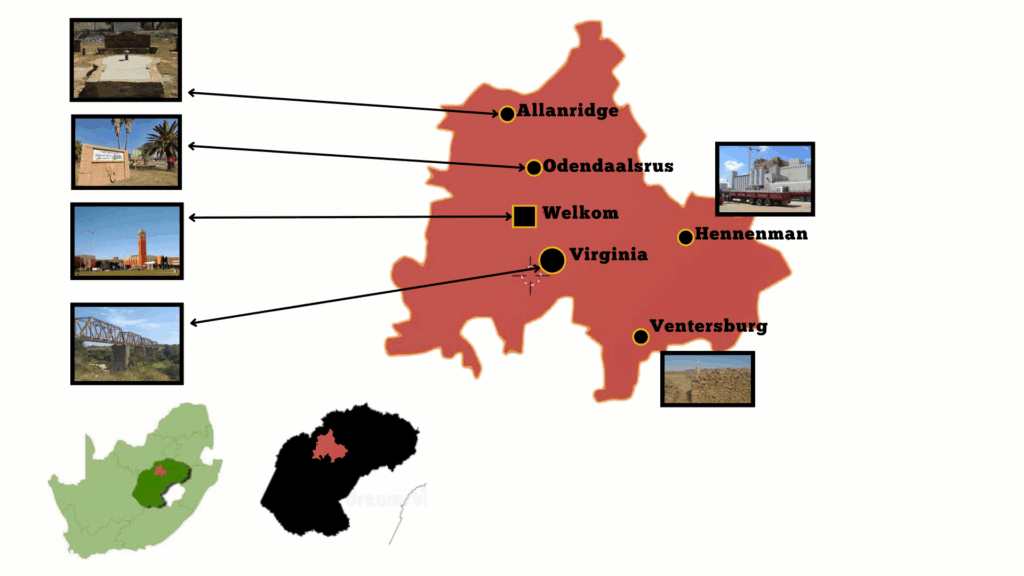
Background.
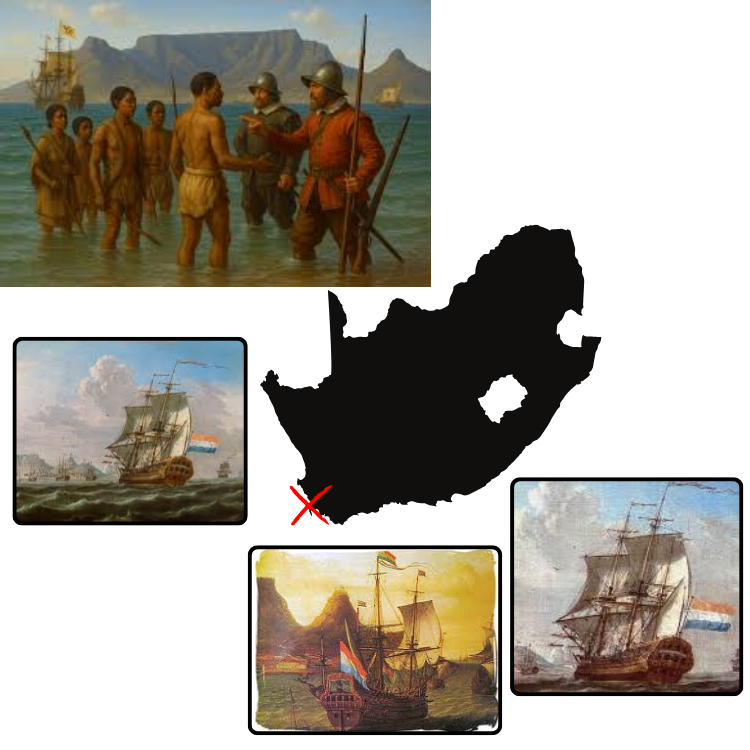
South Africa, an amazing country at the southern most tip of the African Continent. A home to a variety of cultures, ethnicities, races of people and the world’s most friendliest people.
Ever since time immemorial, man’s desire to possess gold, still remains one of his ardent passions. Finding it, moulding it in thousand different ways, still remains one of his most magnificent obsessions.
South Africa gave to the world highest mined volumes of this much sought after mineral. Matjhabeng area (formerly the Orange Free State Goldfields) contributed the most per square metre to the world’s mined gold than any other region in the world!
Exploration for gold and locating it, mining it, processing and moulding it in many different ways left South Africa as an economic powerhouse globally, with the most interesting cultures in the modern world found within it’s borders.
Study after study has been conducted by various institutions in their quest to characterise this amazing place. One of the most interesting studies about the character of South Africa remarked in this fashion:
“The discovery of diamonds in the 1850’s, and of gold in the 1880’s and 1930’s transformed South Africa from an agrarian society at the edge of world trade into a globally integrated industrial economy”
Factors Which Led To Apartheid System In South Africa: Michigan State University.
1. Mining.
1.1 It's Impact In The Area.
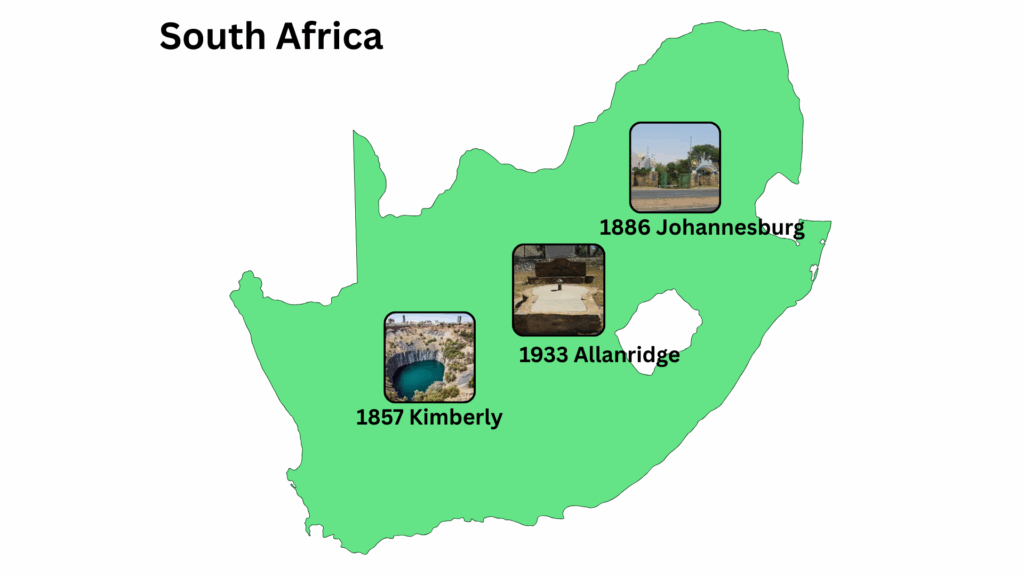
Mining at an industrial scale in South Africa started in the area where the city of Kimberly is built today. Legend says that a young boy called Erasmus Jacobs found a pebble rock, a shiny pebble on the banks of the Orange River.
It was however a finding on a “kopje”, or small hill, at the plot of land in the nearby diggings of the De Beer brothers that changed the whole setup.
That seemingly small discovery would have a profound impact in the country. This diamond find triggered the first rush in search of land claims to mine in South Africa, with and iconic company called De Beers being founded and named after the brothers.
The De Beers brothers were one of the pioneer diggers in the then Cape colony of Southern Africa.
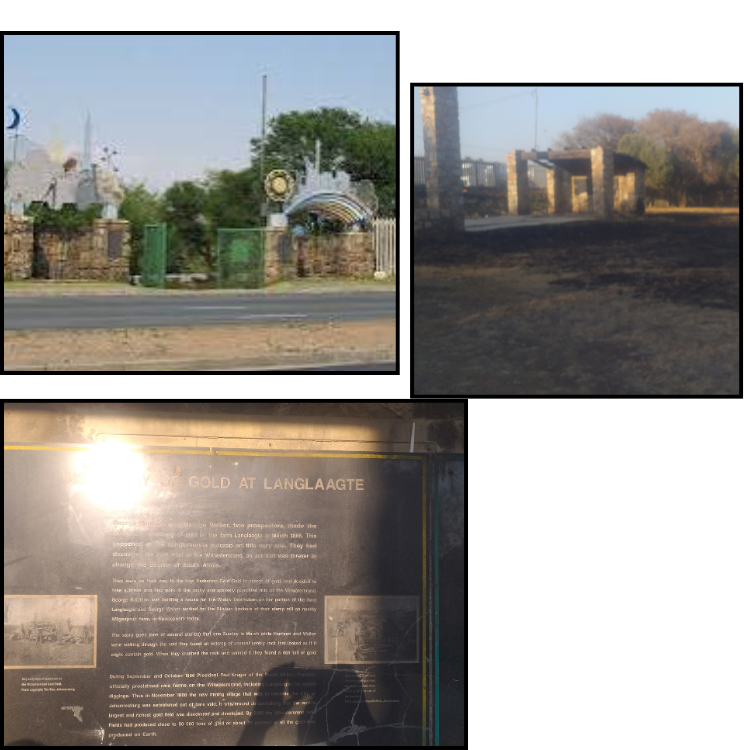
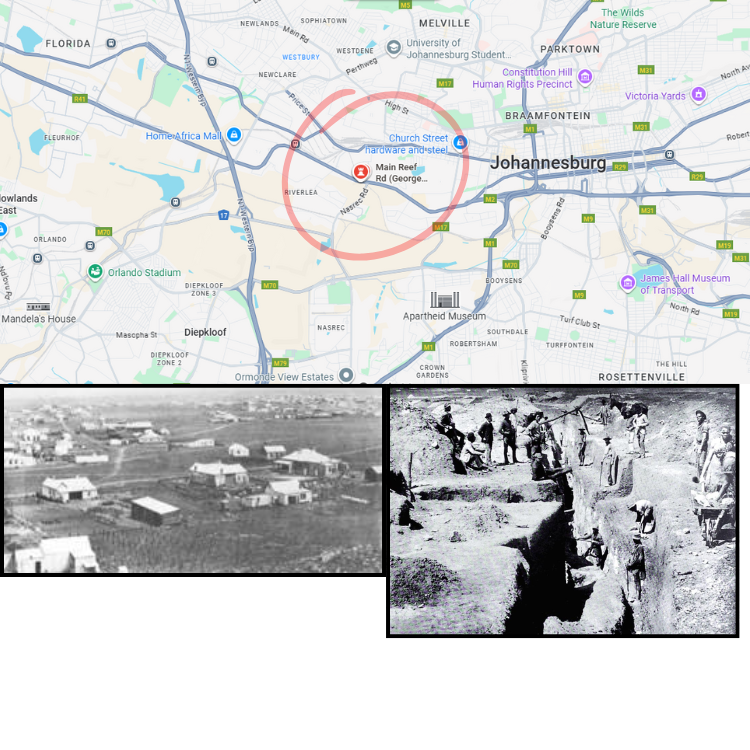
A few years later, the biggest discovery would be made in the then country of the ZAR (Zuid Afrikaansche Republiek), on the farm Langlaagte, by George Harrison and George Walker. The discovery was on this farm that was owned by an Afrikaner “Tannie” (Old Lady) only known by the Surname Oosthuizen.
This discovery, in 1886, triggered the biggest rush in search of gold in the world, and subsequent events that followed transformed the course of history for Southern Africa and the people who resided therein in that region.
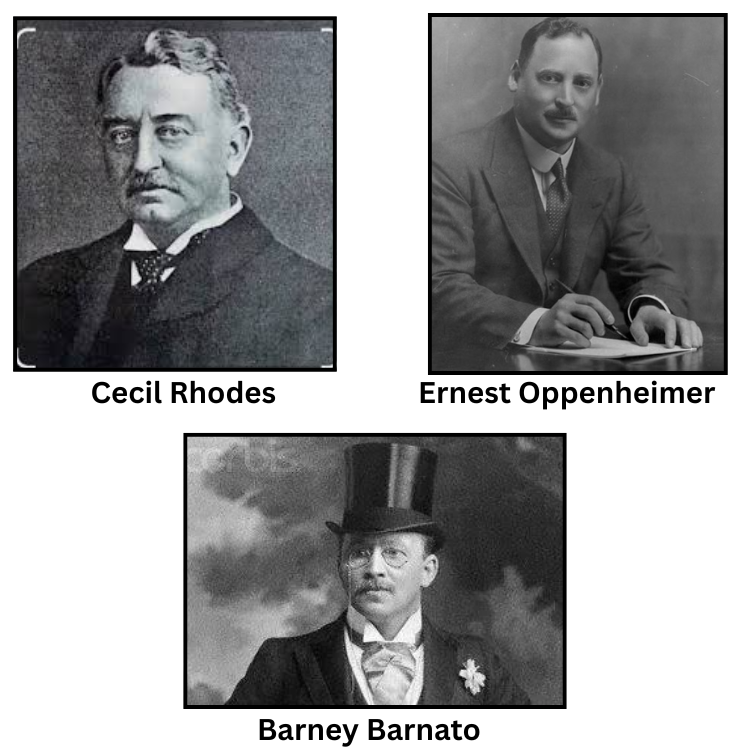
Prominent actors who would shape the character of South Africa, came to this area after the proclamation of the area as a public diggings, most notably Ernest Oppenheimer, Cecil John Rhodes, Barney Barnato and Leander Starr Jameson.
“Three Interrelated factors have contributed to the nature and character of South African society, 1. Colonial occupation, 2. Expansion of mining and, 3. Actions, also known as agency, of individuals.”
Factors Which Led To Apartheid In South Africa:Michigan State University.
1.2 The Expansion Of Mining.
The expansion of mining can be attributed to the discovery at the farm Zoeten-Inval, which later became the town of Allanridge, the discovery of what was known then as the Orange Free State goldfield.
Events that led to it’s eventual proclamation are truly fascinating, because the government had officially declared that there are no gold deposits that can be found in the then Orange Free State.
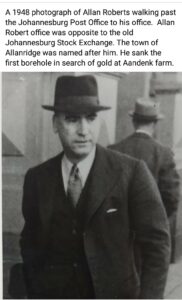
It was Allan Roberts who articulated what he called his pet theory, the “Golden Arc Theory”, which would later be proven correct, after much hardships and ridicule from the peers in the mining industry at the time.
“The Witwatersrand System of rock formation, tapers down to beyond the vaal river into the Orange Free State. Resemblant to the rim of a lake, with Johannesburg lying at the centre of the northern section of the rim. It gradually dips south-west at Klerksdorp, and eastwards at Nigel, with the southern section of the lake-like rim submerged in the Free State, perhaps under hundred, or thousand of feet of shale”
Golden Arc Theory: Allan Roberts.
2. History.
2.1 The Theory That Made It All Possible.
The pursuit by Allan Roberts of his desire to prove this theory, drove him to unlock the greatest goldfield in the world, although to date it is still not yet known by many.
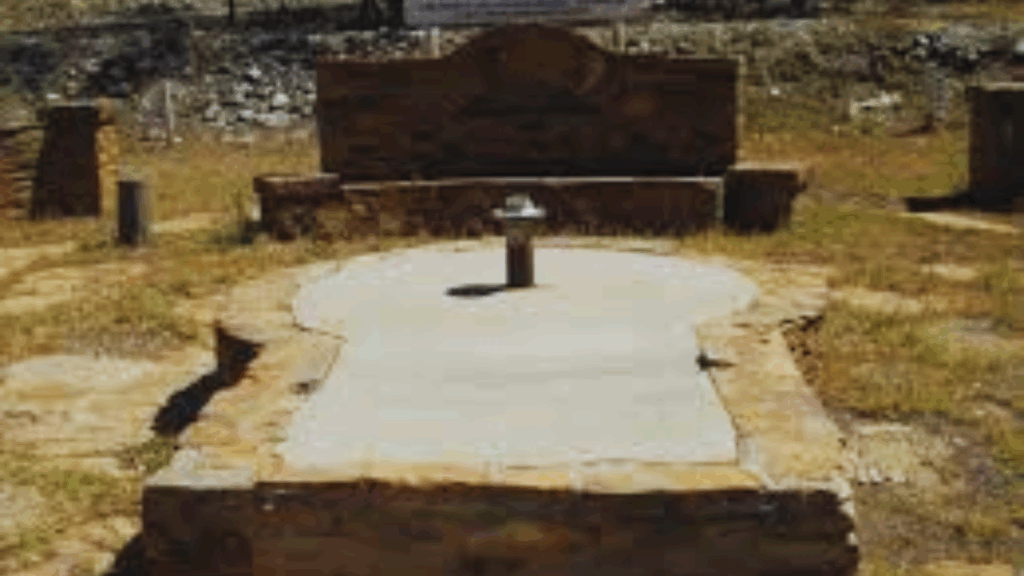
Testimony to his efforts can be seen today at the national monument erected in his honour at Aandenk, adjacent to where the town is built. The town of Allanridge being named after him.
“Ridge”, is actually “Rand” it is and Afrikaans word famously made possible by the official name of the South African currency. So, by naming the town “Allanridge” can be translated to “Allansrand” which in the context of South Africa represents where the wealth of the country was essentially discovered! Think Eastrand, Westrand, Centralrand. All this translated to English means Eastridge, Westridge and Centralridge.
The credit that was given to Allan Roberts was thoroughly deserved, according to many people who had an intimate and closeup exposure to the events at the time. It is recorded that people in the mining industry at the time would laugh at the idea of finding the gold bearing reefs in the Free State.
This is partially because of the official declaration by the government at the time, also because of the tragedies plaguing many initiatives to search for gold. The pioneer prospectors known as Mr Donaldson and Mr Hinds had perished on their journey to the financial markets of London in 1896 on the Drummond Castle ship. This was after they found fair values of gold bearing deposits from their pit dug at Zoeten-Inval.
It is said they would laugh at Allan Roberts, saying he was a man who never turns anything down. It was said he was on the wild goose chase by putting down the Aandenk borehole.
3. Economy.
3.1 Events That Industrialised South Africa.
The economy of South Africa was primarily built on mining, that is mining at industrial scale. Million of tons of soil and rocks were loosened and uplifted in the search of the mineral bearing orebodies, the levels at which any place in the world has never done before.
The diamond rush kickstarted the foray of South Africa entering the mining industrial economy and urban development. Before then, South Africa was an agrarian society with a small footprint in the global economic landscape.
The start of gold mining was triggered by the George Harrison discovery on the farm Langlaagte, few years after the failed attempts at Pilgrims Rest, Barbeton and Smithfield.
The quartz-pebble conglomerates, from which the gold of the Witwatersrand is embedded and mineralised, were first recorded to be processed by the Struben brothers on a small scale.
Credit is however given to two Australian prospectors, George Harrison and George Walker, who stumbled upon the outcrop of quartz-pebble conglomerates at Oosthuizen farm Langlaagte, which was found to be the main reef leader, leading to the biggest gold rush event ever on record globally.
It was the Orange Free State goldfield discovery however, that would forever change the economy and the politics of the country, South Africa.
3.2 Prior Ownership, Change Of Ownership And Major Events In The Orange Free State Goldfield 1938-2014.
| Company Ownership | Year | Change Of Ownership/Exploration Work/Major Event |
|---|---|---|
|
Union Corporation |
1937 to 1946 |
Regional Exploration |
|
St Helena Gold Mining Co |
1946 |
St Helena Gold 1st Shaft Sunk (Production Started In 1951) |
|
Western Holdings Limited And Anglo American Corporation |
1947 |
Welkom General Mine Established. Production Started in 1951. |
|
Free State Development And Investment Corporation
(Freddies) |
1947 |
Freddies North Lease Area And Freddies South Lease Area Established (Production Started In 1953) |
|
Western Holdings Limited |
1948 |
Western Holdings General Mine Established (Production Started in 1953) |
|
Western Holdings Limited And Anglo American Corporation |
1948 |
President Steyn Established (Production Started in 1954) |
|
Free State Geduld Mines Ltd |
1948 |
Free State Geduld Mines Established (Production Started In 1956) |
|
Western Holdings And Anglo American Corporation |
1949 |
President Brand General Mine Established (Production Started In 1954) |
|
Merriespruit Gold Mining Co Ltd. |
1950 |
Merriespruit Gold Mining Company Established (Production Started In 1956) |
|
Virginia Gold Mining Co Ltd. |
1950 |
Virginia GM Established (Production Started In 1954) |
|
Harmony Gold Mining Co Ltd. |
1950 |
Harmony GM Established (Production Started In 1954) |
|
Lorraine Gold Mines Limited |
1950 |
Lorraine Gold Mines Established (Production Started In 1955) |
|
Jeanette Gold Mines Limited |
1950 |
Jeanette Gold Mines Established |
|
Freddies Consolidated. |
1954 |
The Amalgamation Of Freddies Lease Area Into Freddies Consolidated |
|
Jeanette Gold Mines Limited |
1955 |
Jeanette GM Suspended Operations |
|
Merriespruit Gold Mining Co Ltd. |
1956 |
Merriespruit GM Flooded In October, 1956 |
|
Free State Saaiplaas Gold Mining Co. |
1956 |
Free State Saaiplaas Established (Production Started In 1961) |
|
Lorainne Gold Mines Limited |
1958 |
Merging Of Lorainne And Riebeeck GM Operations. |
|
– |
1963 |
Merger And Pooled Production Of Freddies Consolidated Into Free State Geduld And Western Holdings |
|
– |
1964 |
Merriespruit GM Dewatered Through Virginia GM |
|
– |
1966 |
Free State Geduld GM Ceases Operations |
|
– |
1970 |
Free State East Geduld Ceased Operations |
|
Harmony |
1972 |
Merger Of Virginia GM And Merriespruit GM Into Harmony |
|
Unisel Gold Mine Ltd |
1974 |
Unisel Gold Mine Established (Production Started In 1979) |
|
– |
1976 |
The Amalgamation Of Freddies Consolidated Into Free State Geduld |
|
Anglo American Corporation |
1977 |
Anglo American Joint Metallurgical Scheme Starts To Re-Treat Slimes From Old Dumps |
|
Gencor |
1980 |
General Mining, Finance Corp And Union Corp Merged To Become Gencor |
|
Gencor |
1980/1 |
Beisa Mine Opened (Uranium Mine With Gold As A By-Product).
Beatrix Mine Established in 1980 (Production Starting In 1983). |
|
Anglo American Corporation |
1981 |
Several Anglo American Mines Free State Gold Mines Merged. |
|
Gencor |
1983/4 |
Beisa Mine Closed Due To Weak Uranium Prices. |
|
African Selection Trust |
1985 |
Beisa Mine Restarted (Renamed Oryx Mine) |
|
Anglo American Corporation |
1986 |
Anglo American Mines Merged Into Free State Consolidated North And Free State Consolidated South, Which Collectively Became Freegold. |
|
JCI |
1986 |
Joel Mine Established. |
|
Anglo American Corporation |
1993 |
Free State Consolidated Gold Mines Limited (Freegold) Formed From All Anglo American Free State Operations. |
|
Anglo American Corporation |
1994 |
Relogging of 62 Drillholes In The Southern Free State Goldfield Region; From Adjoining Beatrix And Harmony Mines. |
|
Gencor |
1998 |
Gencor Took Ownership Of Oryx Mine. |
|
Anglo Gold |
1998 |
Anglo Gold Acquires Joel Mine. |
|
GFSA And Gencor Merger |
1998 |
GFSA And Gencor Merge To Form Goldfields Limited. Goldfields Limited Takes Ownership Of Oryx Mine And Integrates It Into The Beatrix Mine. |
|
AvGold |
1998/9 |
Development Of Target Mine (Production Started In 2002/3) |
|
Harmony JV |
2001 |
AngloGold Sold It’s Mineral Rights To Harmony JV |
|
Harmony |
2004 |
Harmony Acquired Target Mine. Target Mine Had Taken Over #1;#1c;#2 And #5 Of Loraine Gold Mines. |
|
Wits Gold |
2006/7 |
Wits Gold Granted New Order Prospecting Rights (Southern Free State Goldfield, Le Roux And Properties). |
|
Wits Gold |
2008 |
Wits Gold Granted NOP Rights For Floriana, Beisa North, Beisa North Extension And Beisa South. |
|
Wits Gold |
2010 |
Wits Gold Acquires Merriespruit South From Harmony And Also Acquires Harmony’s 40% Option Over Wits Gold’s Southern Free State Goldfield Assets. |
|
Sibanye Gold |
2014 |
Wits Gold SOFS Acquired By Sibanye Gold. |
Source: Gilchrist And Hacket.
4. Politics.
4.1 The Shift Towards Apartheid Policy Development.
Many pivotal moments happened in South Africa at various stages of it’s development, primarily driven by discoveries of important minerals, which to a large extent influenced shifts in government policy.
None is more noteworthy than the promulgation of the policy of separate development, popularly known as Apartheid, in the history of South Africa as a country.
Various administrations from the early 17th century were concerned with insulating the white race groups in South Africa from the negative elements that can be brought about by the lack of economic opportunities.
Several intellectuals, institutions and government administrations progressively created laws which segregated the country in such a way that the white sections of society could enjoy economic prosperity and relative comfort. Of all such activities, none would compare to the institutionalised system of segregation known as Apartheid.
Events leading to the exploration and subsequent declaration of the Orange Free State goldfield can be primarily credited with the conditions that was used by various interest groups to lobby for the implementation of Apartheid as government policy.
From 1857, the mining companies, with the help of government administrations, were passing laws that would create economic impoverishment of Africans people as a means of forcing them to go look for jobs in the mines as labourers.
Many discriminatory laws like the pass laws called Hottentot proclamation of 1809, Masters and Servants Acts 1856, poll and hut tax of 1906 which led to the Bambatha rebellion, the Glen Grey act of 1894 etc.
4.2 Role Played By Various Commissions.
The Asiatic Inquiry commission of 1921.
Commissioned to investigate the “encroachment” by Asians in South Africa.
The Carnegie Commission of 1932.
This commission was appointed to investigate the causes of the white poverty problem.
The Hertzog Bills of 1937.
The Fagan commission of 1946.
Commonly known as the native laws commission, appointed to investigate the relaxation of influx control measures for Africans in the Orange Free State to enable urban development.
The Sauer Commission of 1947.
This commission was created to oppose the Fagan Commission report, which recommended relaxation of influx control and the intensification of segregation, leading directly to the formation of Apartheid in South Africa.
From as early as 1896, attempts were being made to search for the gold bearing reefs in the Orange Free State, albeit to no success.
Many attempts led to heartbreak, loss of life and limb, and loss of huge amounts of money. The then Orange Free State officially declared that no gold bearing reefs of economic value was to be found in the Orange Free State prior to the attempt and discovery of gold by Allan Roberts in 1933.
5. Culture And Heritage.
5.1 Way Of Life For Many People In The Region.
Daily realities and existence of people in South Africa where essentially moulded by a flow that emanated from work-life balance, and the laws enacted to maintain that established order, primarily linked to how mines arranged their operations within the area.
The related industries linked to gold mines of the Orange Free State had a profound impact on the nature of the daily activities of every inhabitant who lived within the area.
Institutional arrangements from types of schools to be built, faith organisations like churches and cultural practices of the local inhabitants were profoundly impacted by the envisaged development.
After the national government had appointed the Fagan commission, with the objective of getting a scientific solution and a report from the study of how future settlements and developmental path the region would be engineered to follow.
Recommendations were made by the Fagan commission under the government of Jan Smuts. The study’s findings could not be implemented due to the change of government at the national level. DF Malan won the elections of 1948, with the recommendations of Sauer commission being implemented instead, after campaigning on the slogan of “Apartheid”.
Influx control measures were highlighted as an important intervention to enable urban development, facilitate the securing of the critical labour to help bring mine production without further delay.
The National party, which was an opposition political party in the then government under the leadership of Daniel Francois Malan, resolved to appoint it’s own study, known as the Sauer Commission, to lobby and justify for the implementation of how they envisaged the development of the area should follow.
It’s recommendation was to intensify segregationist approach to the development of the Orange Free State goldfield, this was the inception of the Apartheid system in the context of South Africa!
The Jan Smuts government responded by issuing a moratorium against any inflow by fortune seekers and any building or structure not to be erected in the area until the commission findings are made public. This action also made the Orange Free State goldfield discovery culturally and historically unique that there would be no uncontrolled inflow into the area of significant gold discovery. Goldrushes were common and widespread in areas which proved availability of gold deposits.
Despite the determination and public proclamation of it’s size and magnitude of the Orange Free State goldfield, there was however a tight control on how development would take place in the area, making this development unique in the history of gold mining led economic development.
More than 1000 boreholes were drilled in the then Orange Free State. The purpose was to determine the extent, the depth, scope and direction of the gold bearing reefs under the ground. No other region has been thoroughly assessed as to it’s gold bearing potential before any single mine was opened.
Many mining houses, organised under the chamber of mines, would later use this investment in the search for gold in the Orange Free State goldfield to lobby for policies that would justify the investments made.
The first forced removals of the Africans to make way for a pre-determined urban development during Apartheid was in Odendaalsrus. The adjacent segregated settlement of Marobe, few meters next to the town, was destroyed to the ground. It’s inhabitents were moved to a newly established township called Kutloanong, north east of the town,
This was effected under the newly promulgated laws under the system of separate development called apartheid. The area was declared a whites only area under the group areas act of 1950.
The richest gold bearing section was discovered by a borehole on the farm Geduld, so the commonly unstated methodology of Apartheid, which was to get black Africans far from economically active zones, was firstly effected in the area.